Delights of a Levantine spring: Food illustration of Jordanian almonds
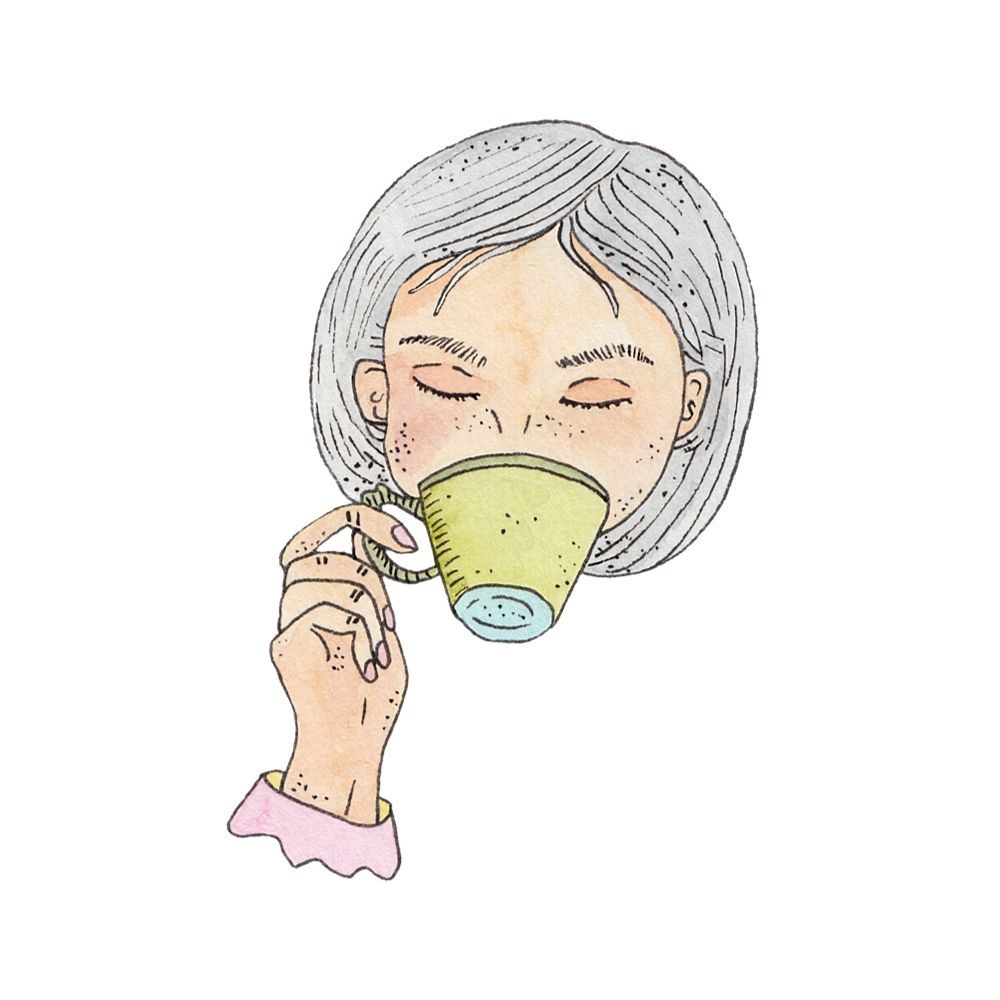
A few weeks ago, I decided to create this food illustration of Jordanian almonds. I knew it had to reflect the local culture behind the ingredient. To this end, I illustrated a Jordanian woman carrying a handful of almonds in both hands, as she wore a traditional dress and heritage jewellery to accessorise.

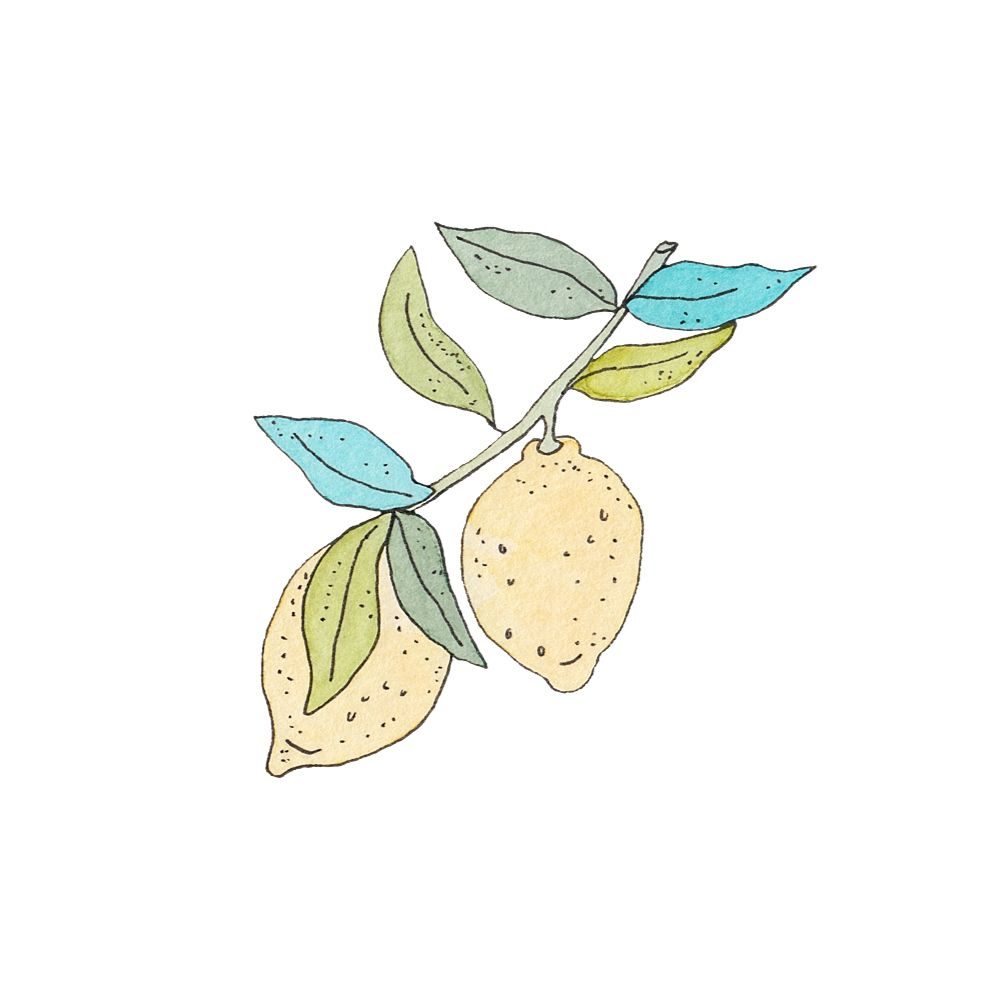
Jordanian green almonds are particularly sour and taste great with a pinch of salt. A snack favourite that many Jordanians – and people of the Levant (Bilad al-Sham) – like to enjoy when these fuzzy fresh fruits are in season.
Harvested in March and April, green almonds are, in deed, a true sign of spring.
For someone who loves snacking on springtime offerings, such as “Janerik” (sour green plums), creating a food illustration of Jordanian almonds is nothing short of a treat. From the start, I knew it had to reflect the local culture behind this native agri-food ingredient.
Notably, in the Syrian and Lebanese dialects, green almonds are simply “Oja” (or “Ouja”). However, in Jordan, people commonly refer to them as just “Loz Akhdar,” which literally translates into “green almonds.”
I did a bit of research and found out that farmers grow almonds in the North of Jordan, most commonly in the Governorate of Irbid. Most Jordanians refer to its capital, the bustling city of Irbid, as the “Bride of the North” or “Aroos el-Shamal” in Arabic, owing to its green pastures.
Notably, in the Syrian and Lebanese dialects, green almonds are simply ‘Oja’ (or ‘Ouja’). However, in Jordan, people commonly refer to them as just “Loz Akhdar,” which literally translates into ‘green almonds.’

Food illustration of Jordanian almonds: Artwork reflecting national identity and heritage
I wanted to find a way to create a visual cultural link between the green almonds and their home town, Irbid. That’s when the idea of illustrating a woman wearing a traditional Jordanian dress with Irbid-inspired motifs came to mind.
Apparently, handmade Irbid “thobes” (or embroidered dresses) are famous for their unique needlepoint stitch patterns. Prominent among those are the “Mraggam” (Muraqqam in classical Arabic), and “el-Bain Ibertain,” which translates into “between two needles.”
Regrettably, I found this information sporadically scattered across Pinterest and other image search engines. Jordan is yet to have a proper database that documents traditional Jordanian costumes, embroidery techniques and jewellery, among other components of the local culture.
There are some mentions here and there, including on the website of the Ministry of Culture. But the quality of the photos is extremely poor and the methodology for archiving the material is virtually non-existent.
This lack of literature and historical and cultural information about our own country needs to be remedied as a priority for the Ministry of Culture in Jordan. With the allocation of the right budgets and with a strong team of researchers, writers, editors, photographers, illustrators and graphic designers, we can do this!
Cultural illustration of handcrafted jewellery from Jordan
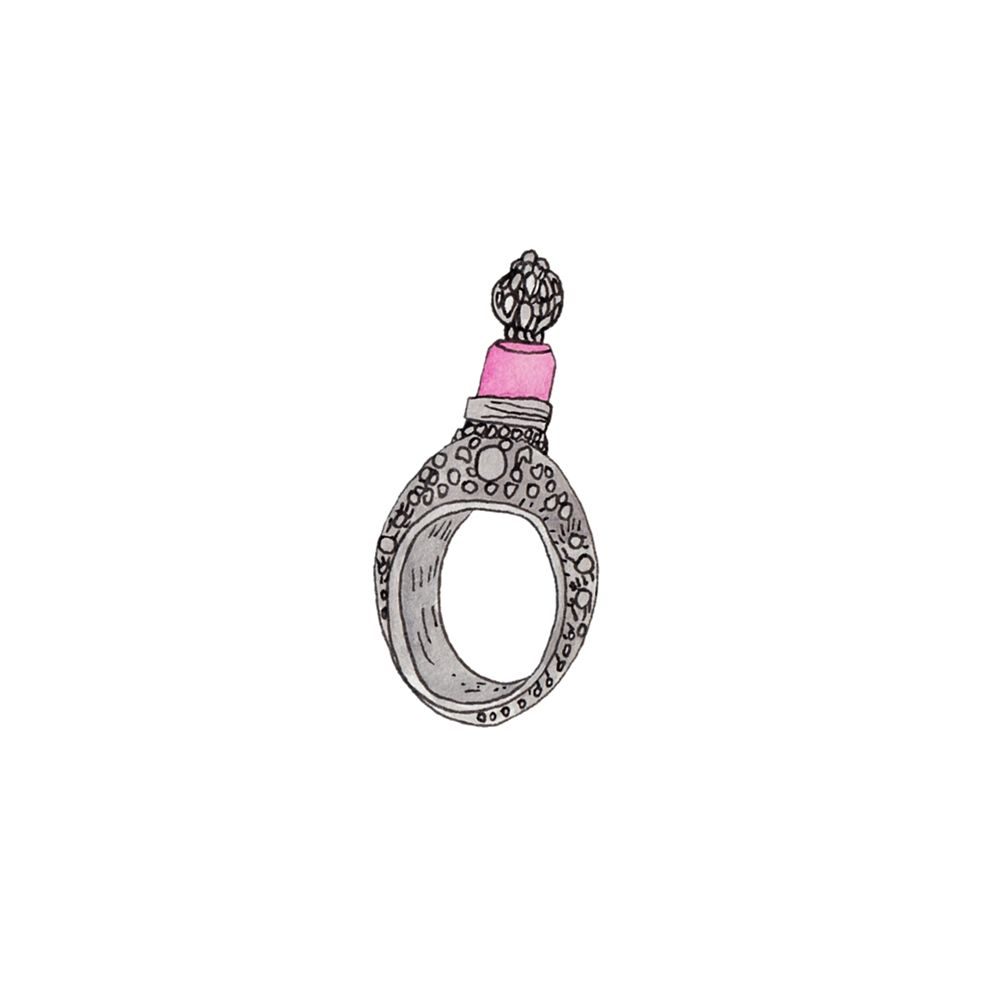
To drive the cultural message home, the illustrated woman in this post is wearing an antique silver fish amulet decorated with “niello” patterns.
According to a book I have dubbed, “Cultural Treasures of Jordan: Jordan’s Traditional Crafts” by TURAB, the “niello” technique is basically a form of ink engraving, achieved after “cutting lines and patterns into the surface” of silver amulets, pendants and bracelets.
On the illustrated woman’s wrist, readers can see a Bedouin-inspired silver-plated bracelet made of coiled silver wires, a technique known as “Mabroum.”


In the news: FAO and Jordan to conserve local almond varieties
As mentioned earlier, to create this illustrated Levantine food ingredient, I did a lot of research to try and understand the various cultural and agricultural connotations of homegrown almonds.
My research pointed me in the direction of a news item that I thought was very interesting.
Apparently, Jordan’s National Agricultural Research Center (NARC) has recently signed an agreement with the Food and Agriculture Organisation of the United Nations (FAO) towards the “conservation” and “genetic enhancement” of local almond varieties in Jordan.
Preservation of local varieties is a welcome step; that’s for sure. Curiously, though, the press release, published in January 2026, does not exactly explain the actual meaning of “genetic enhancement.” Or whether it is another word for Genetically Modified Organisms (GMO), generally frowned-upon by the Jordanian consumer.
A few years ago, I did some research for one of my opinion pieces and found out that Jordan has banned GMO seeds from its farms and fields. Makes this particular announcement all the more interesting.
As a former environmental reporter, I find it quite disheartening that Jordanian media outlets could not be bothered to ask a simple question about the actual premise of “genetic enhancement.”
This is because Jordanian media is not just weak on investigative reporting. Generally-speaking, editors and reporters publish the press releases they receive as is, no questions asked. From experience, most do not check the validity of the data, nor look into filling the gaps in the press releases they decided to post.
This said, let’s at least celebrate the fact that Jordan has been taking serious strides in the agricultural sector as of late, which is great news for food security in the Kingdom and the region.



Leave a Reply